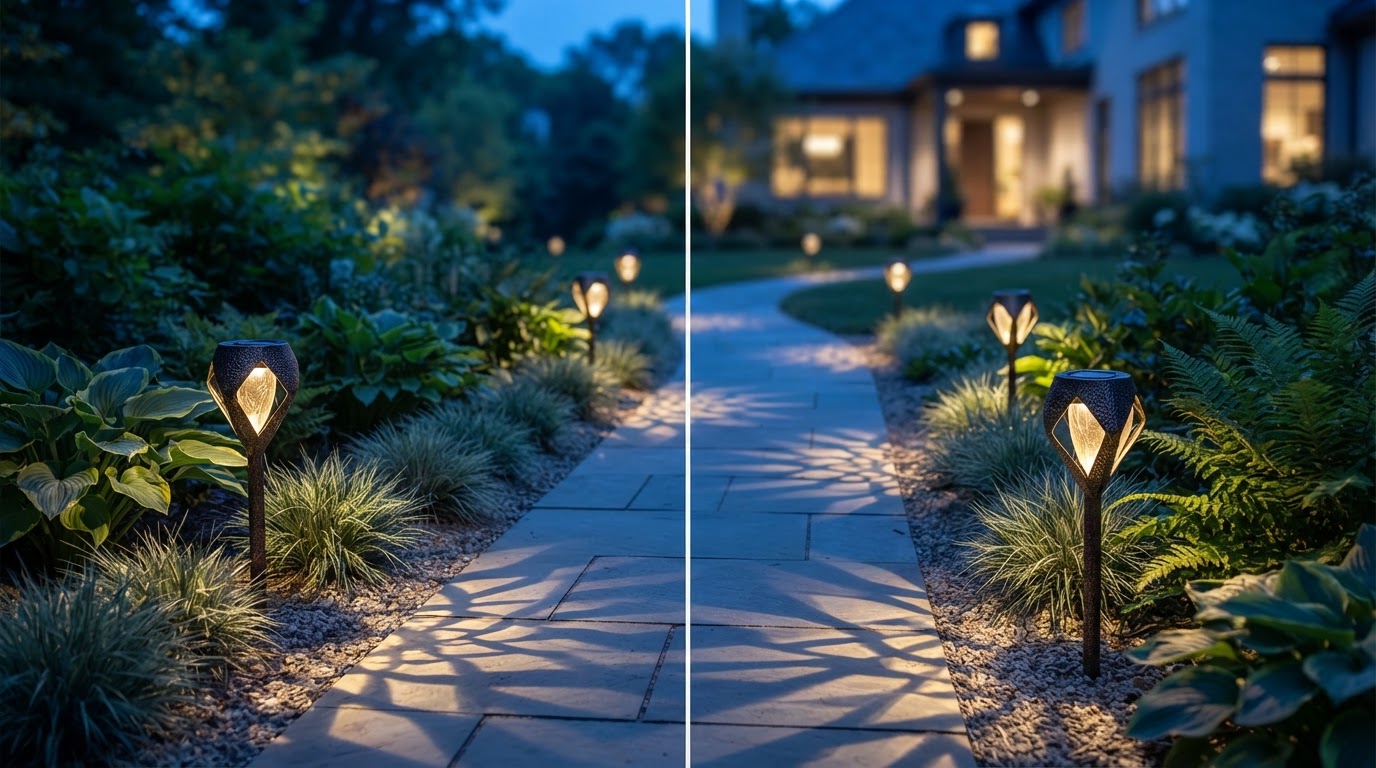
Modern Floral Walkway Lighting with Bloom Path Lights
 Priya RamanSenior Analyst
July 28, 2026 — The shift toward sculptural, organic silhouettes in residential exteriors has positioned Bloom Path Lights as a primary solution for property owners seeking to blend botanical aesthetics with high-performance illumination. As modern landscapes move away from utilitarian bollards, the demand for fixtures that mimic natural forms while maintaining structural integrity has grown significantly.
Traditional lighting design often prioritizes visibility at the expense of daytime visual appeal, but recent trends emphasize fixtures that serve as garden art. According to Kichler, pathway lights are essential not only for illuminating walkways but also for highlighting low-growing foliage within landscaping beds, creating a layered visual effect that enhances curb appeal. This dual-purpose approach requires a sophisticated understanding of how light interacts with both hardscaping and softscaping elements. To evaluate these fixtures effectively, we can utilize a simple 3-axis model: architectural durability, light dispersion quality, and botanical integration. Think of it as a matrix of functional safety and aesthetic harmony.
The Triple-Axis Integration Framework
When assessing modern floral walkway lights, two axes matter here: the physical resilience of the housing and the specific geometry of the light throw. Bloom Path Lights utilize a design language that bridges the gap between decorative art and safety equipment. The first axis, architectural durability, is addressed through the use of weather-resistant materials. Industry standards at 2Modern indicate that high-quality modern path lights are typically constructed from powder-coated aluminum or marine-grade steel to ensure they perform reliably in diverse climates. The second axis, light dispersion, focuses on how the "petal" or floral structure of the fixture directs lumens downward to prevent glare while ensuring the path is clearly visible. Unlike standard floodlights, these fixtures create a controlled pool of light that respects the natural darkness of the garden. The third axis, botanical integration, refers to how the fixture complements existing flora. By mimicking the heights and shapes of real flowers, Bloom Path Lights disappear into garden beds during the day and emerge as luminous accents at night. This framework ensures that homeowners do not have to choose between a safe walkway and a beautiful garden. The decision rule: if the fixture does not enhance the landscape's visual texture during daylight hours, it fails the modern floral standard.
Expert tip: When installing your fixtures, stagger them at varying heights to mimic the natural growth patterns of a flower bed, which enhances the depth of your outdoor decorative bloom lighting and prevents a rigid, commercial appearance.
Once you see it this way, it becomes clear that selecting bloom landscape lighting for patio areas requires the same attention to detail as choosing the plants themselves. Proper placement ensures that the outdoor decorative bloom lighting serves as a guide for guests while the bloom landscape lighting for patio spaces creates a cohesive transition between different outdoor zones.
Sources

Photo by Abenezer Muluken on Pexels
- 280 Best Pathway Lighting ideas | landscape ...
- Modern Path Lights
- Landscape Path Lighting & Pathway Lights