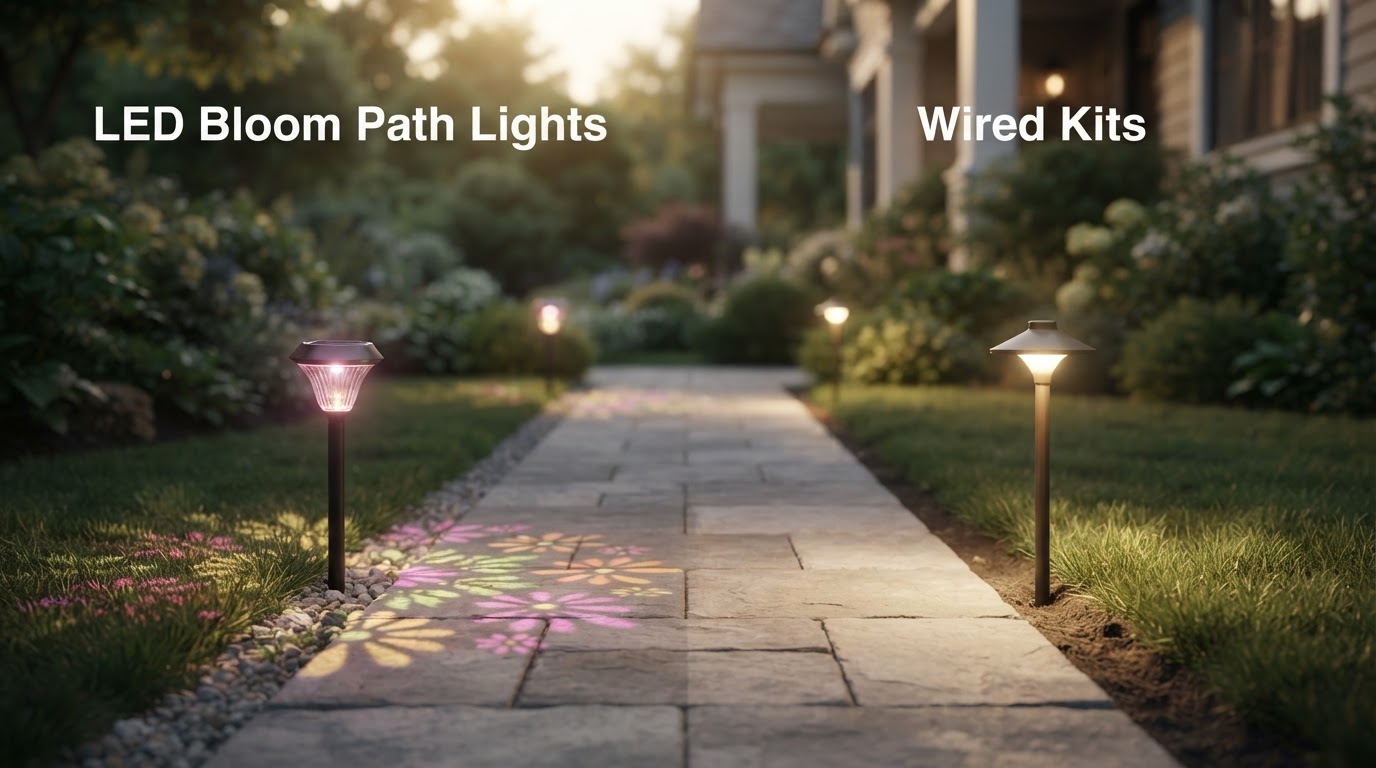
Choosing Between LED Bloom Path Lights and Wired Kits
 Sam VasquezBuying Guide Lead
August 16, 2026 — The shift toward decorative landscape illumination has intensified this season, with Bloom Path Lights leading a move toward fixture designs that blend botanical aesthetics with high-efficiency LED technology. As homeowners look to define their property lines, the choice often comes down to the convenience of standalone solar units versus the permanence of hardwired systems.
While traditional lighting relied on halogen bulbs, modern installations prioritize LEDs for their longevity and lower heat output. According to specifications from Total Outdoor Lighting, professional-grade flower path kits often utilize 12-volt systems with 40-watt to 100-watt power packs, providing a consistent brightness that doesn't fluctuate with weather patterns. However, these systems require significant trenching and cabling, making them a heavier lift for the average weekend project. Bloom Path Lights offers a different trajectory by integrating the photocell and battery directly into the floral housing, removing the need for 160-foot cables and external timers.
The Three-Point Installation Framework
When I evaluate walkway lighting, I look at three specific factors: power consistency, installation labor, and long-term maintenance. If you are looking at the Sunco Solar Garden LED Bloom Path Light, you are getting a round, dusk-to-dawn photocell system that requires zero wiring and zero electricity costs. These are ideal for modern walkway lights solar setups where you want to avoid digging up a manicured lawn. On the other hand, the Pro Outdoor LED kits from Total Led Malibu Lighting, which can range from $755.63 to over $910.45, offer aluminum powder-coated housings in bronze or verde green. These kits are built for those who want a permanent, high-voltage look and don't mind the $700+ entry price. Between these two, I’d go with the Bloom Path Lights for most residential walkways. The ease of placement allows you to adjust the layout as your garden grows, whereas wired kits lock you into a fixed position. If you're on a budget, the solar route eliminates the need for expensive power packs and professional electricians. Skip this if you live in a region with heavy, year-round tree canopy coverage that prevents solar charging, as you will likely need the hardwired reliability of a 12V transformer system. For everyone else, the aesthetic solar path lighting provided by modern LEDs is more than sufficient for safety and curb appeal.
Expert tip: When placing LED bloom fixtures, stagger them every 6 to 8 feet rather than placing them in a straight line. This creates a natural flow that mimics a garden path and prevents the 'airport runway' look often caused by over-lighting.
Properly managing your outdoor space also means considering the environment; if you reside in a high-moisture area, ensure you are [installing waterproof Bloom Path Lights for wet climates](/blog/waterproof-yard-path-lighting) to prevent internal condensation. For those just starting their layout, understanding the nuances of waterproof yard path lighting ensures your investment lasts through the winter months.
Here’s what I’d actually buy: the Bloom Path Lights solar units provide the best balance of visual appeal and DIY simplicity without the $700 overhead of wired kits.
Sources

Photo by Gorma Kuma on Pexels
- LED Outdoor Landscape Flower Path Light & Complete Kits
- Solar Garden LED Path Lights, Round, Bloom, Dusk to Dawn Photocell
- Pro Outdoor LED landscape lighting flower path kit, 12 path lights, 100watt ...