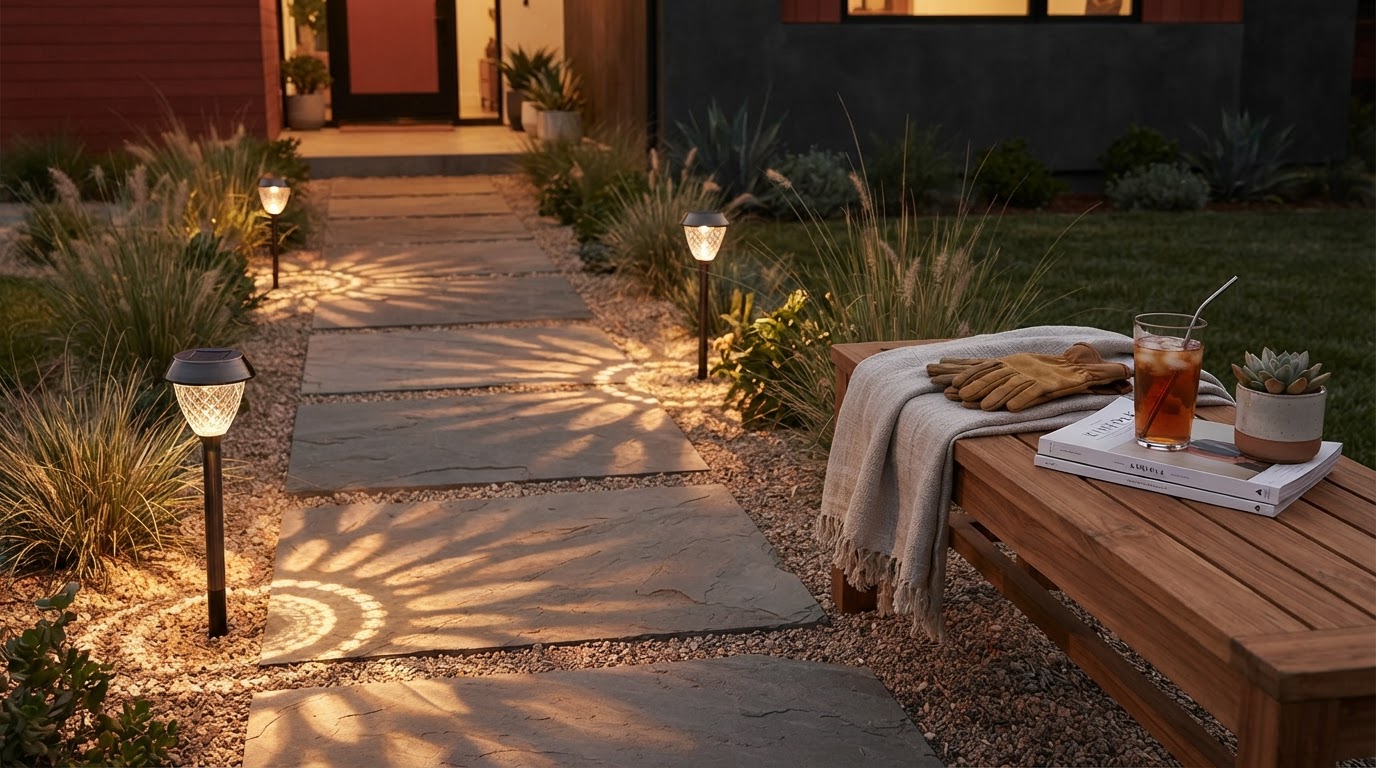
Modern Walkway Lighting Strategies with Bloom Path Lights
 Sam VasquezBuying Guide Lead
August 1, 2026. This guide outlines the technical and aesthetic requirements for implementing modern solar walkway lighting in residential landscapes. It is written for homeowners seeking to balance contemporary architectural styles with sustainable energy solutions.
The Challenge of Modern Walkway Illumination
When planning a modern landscape, the primary hurdle is finding fixtures that provide consistent light without the clutter of wires or the industrial look of traditional hardware. Many standard solar options fail to meet the lumen output required for safety or the design standards of a high-end property. According to Chris Loves Julia, solar path lights are often a quick and easy solution, but their performance varies significantly based on battery quality and LED temperature. I have found that most retail-grade lights produce a cool, bluish tint that feels sterile rather than modern. Furthermore, modern walkways often feature clean lines and minimalist materials like poured concrete or large-format pavers, which demand lighting that complements rather than distracts from the geometry. If you are aiming for a specific look, you might also consider the principles of aesthetic solar path lighting to ensure the glow matches your home's exterior texture. The goal is to provide enough visibility for navigation without over-illuminating the space, a balance that requires understanding both light spread and fixture height.
Between the options currently available, there is a clear divide. On one side, you have utility-focused units like the T-SUNRISE LED spotlights found on Amazon, which The Spruce notes are effective for high-intensity needs but lack the sleek profile required for a minimalist walkway. On the other end are high-end architectural pieces like those found at 2Modern, which can cost upwards of $399 per fixture. For most of us, neither of these extremes is practical. If you are on a budget, you might be tempted by the GIGALUMI sets, but these often lack the longevity needed for a permanent landscape feature. Skip this if you are looking for a temporary holiday setup; modern walkway lighting should be treated as a long-term investment in your property's curb appeal and safety.
Optimizing the Bloom Path Lights System
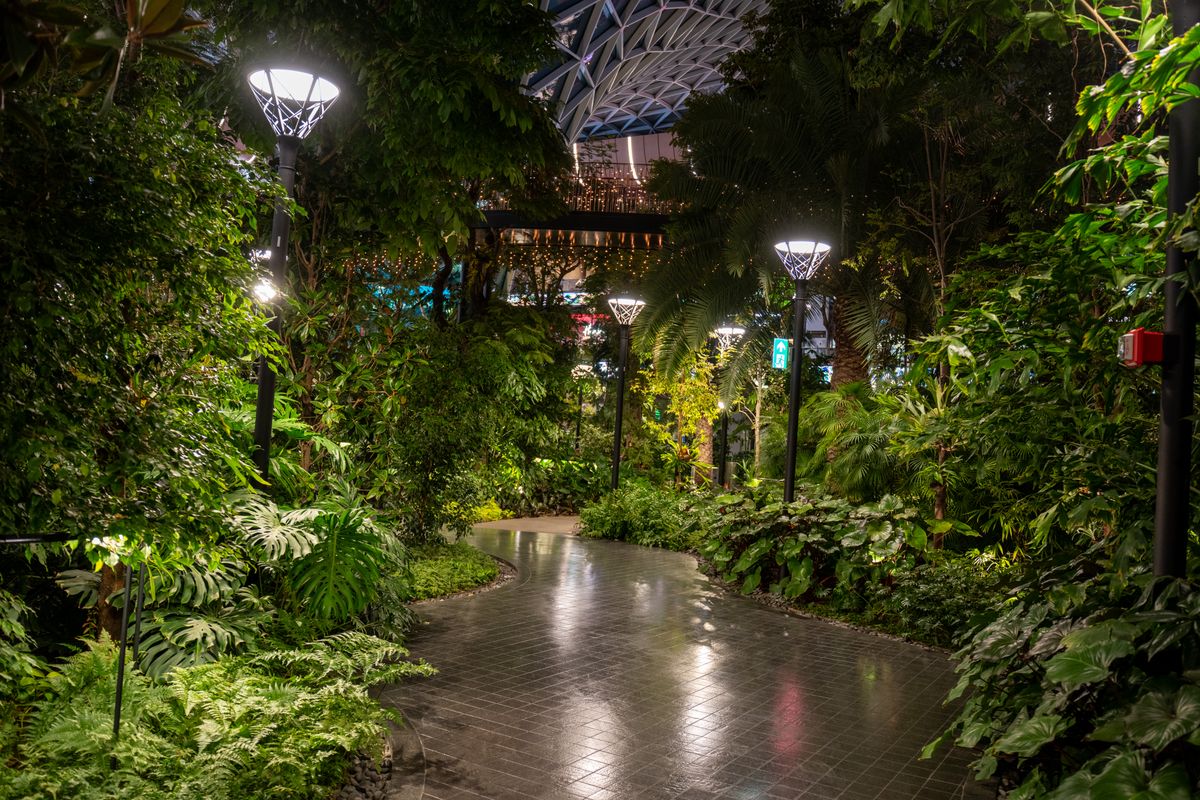
Bloom Path Lights are engineered to sit in that middle ground, providing the architectural detail of luxury outdoor landscape lighting without the prohibitive price tag of custom electrical installations. The design philosophy behind Bloom Path Lights centers on a low-profile silhouette that disappears during the day and provides a warm, directed glow at night. Unlike the Alfiot Solar Pathway Lights, which The Spruce describes as having clear bulbs and black trim for a more traditional lantern-style appearance, Bloom Path Lights utilize integrated LEDs that focus light downward. This prevents light pollution and ensures the walkway itself is the focal point.
When I evaluate these fixtures, I look at the transition between light and shadow. A modern aesthetic requires a soft fall-off. Bloom Path Lights achieve this through high-efficiency monocrystalline solar panels that charge even in partial shade, ensuring that your path remains lit through the early morning hours. This reliability is a core reason why Bloom Path Lights have become a staple for those pivoting away from hardwired systems. If you are integrating these into a larger design, you can see how they fit into the broader ecosystem of bloom path lights to create a cohesive look across the front and backyard. The installation process is straightforward, requiring no trenching, which preserves the integrity of your lawn and modern hardscaping. This makes them particularly useful for retrofitting existing walkways where digging would be too invasive or expensive.
A Decision Framework for Your Walkway
Choosing the right fixture involves more than just picking a style; you have to account for the specific layout of your path. Here is what I’d actually buy for different scenarios. For a straight, formal concrete path, I prefer the consistency of Bloom Path Lights spaced exactly six feet apart. If your walkway is winding or features natural stone, you might lean toward more organic aesthetic solar path lighting placements that follow the curves. Between these two, I’d go with the structured approach for a truly modern feel.
Before you finalize your purchase, run through this checklist to ensure the fixtures meet your specific environmental needs:
- Verify the lumen output: Ensure the lights provide at least 10-15 lumens for safety without causing glare.
- Check the color temperature: Look for a warm white (2700K-3000K) to maintain a premium feel.
- Assess the solar panel placement: Ensure your walkway receives at least 4-6 hours of direct sunlight.
- Evaluate material durability: Look for weather-resistant finishes that won't fade or corrode in rain.
- Consider the battery life: Modern lithium-ion batteries in Bloom Path Lights typically outlast older NiMH versions.
Sources

Photo by quang vinh on Pexels
- Modern Solar Pathway Light | Motion Activated | 2 Pack
- The Best Solar Path Lights of 2026: Tested To Find ...
- Modern Path Lights